The Renter’s Guide to Winterizing: Stop Drafts & Lower Bills (Eco-Friendly)
December 15, 2025 • Hyper-Efficient Design & Tiny Living
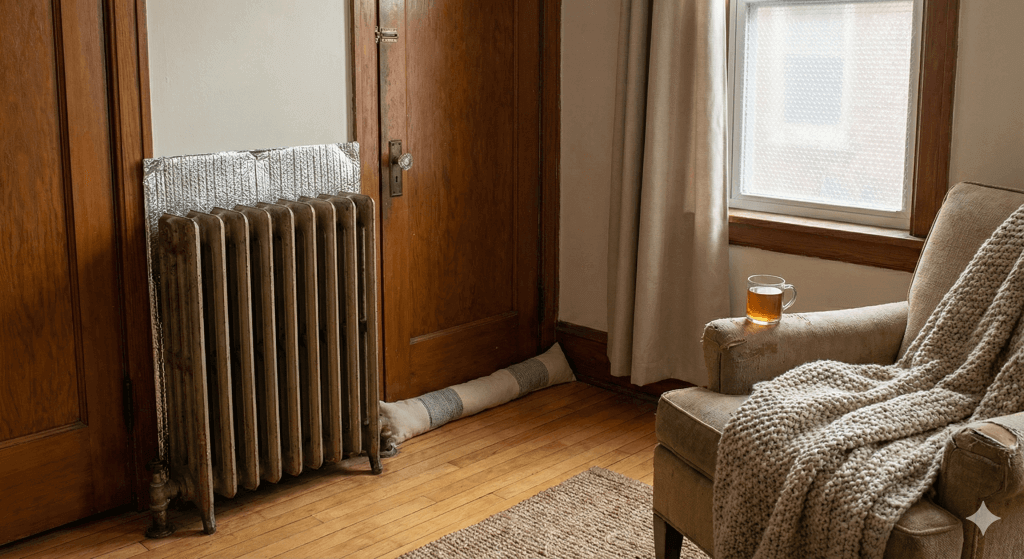
Stay warm, save money, and save the planet—all from your rental.
There is a specific kind of dread that sets in when you live in an older rental apartment and the temperature drops below freezing.
You can feel the cold radiating off the windows. You can hear the wind whistling under the front door. And you know that next month’s utility bill is going to hurt.
If you owned the home, you might upgrade the insulation or install double-pane windows. But as a renter, you are stuck with what you have. Or are you?
At SmallEcoSpace, we believe efficiency is the first step to sustainability. Wasting heat is wasting energy. In this guide, we are sharing our top **apartment winterizing tips** to help you seal the heat in, keep the cold out, and get your security deposit back in full when spring arrives.
1. The Window Hack: Bubble Wrap Insulation
Windows are the number one source of heat loss in small apartments. While plastic shrink-wrap kits are popular, they are single-use plastics that end up in the trash.
A more eco-friendly alternative? **Bubble wrap.**
If you have saved packaging from online orders, put it to work. The air pockets in bubble wrap act as tiny insulators, similar to double-pane glass.
The Water-Mist Method (No Tape Required!)
- Cut to Size: Cut a sheet of bubble wrap to the exact size of your window pane.
- Mist the Glass: Use a spray bottle to mist water onto the clean window glass.
- Stick it On: Press the flat side of the bubble wrap against the wet glass. The surface tension of the water will hold it in place all winter long—no tape or glue required!
- The Result: It creates a thermal barrier that still lets light in. When spring comes, peel it off, dry it, and save it for next year.
2. The “Draft Snake”: A Zero-Waste Sewing Project
If you can feel a breeze coming from under your front door or hallway door, you are paying to heat the corridor.
The solution is a classic **DIY draft stopper** (often called a Draft Snake). This is the perfect beginner sewing project to use up scrap fabrics.
How to Make One:
- The Shell: Take the leg of an old pair of heavy tights, thick winter socks, or sew a tube from old denim/flannel scraps. It needs to be as wide as your door.
- The Filling: Fill the tube with dried beans, rice, or even clean cat litter (unused, obviously!). These materials are heavy enough to stay in place and dense enough to block air.
- The Use: Simply shove it against the crack at the bottom of the door. It blocks the cold air and creates a cozy visual barrier.
3. The Radiator Reflector
If you are lucky enough to have radiators, make sure they aren’t heating the wall behind them instead of your room.
The Hack: Place a sheet of tin foil (shiny side out) mounted on a piece of cardboard behind the radiator. This reflects the heat back into the room rather than letting it soak into the cold exterior wall. It’s simple physics, and it’s free.
4. Humidity is Your Friend
Have you ever noticed that 68°F in summer feels hot, but 68°F in winter feels freezing? That is because of humidity.
Winter air is dry, and dry air feels colder on your skin. By raising the humidity in your small apartment, you can turn the thermostat down a few degrees and still feel comfortable.
Eco-Ways to Humidify:
- Drying Rack: Dry your laundry on a rack inside the apartment. As the water evaporates, it humidifies the air (and you save energy by skipping the dryer).
- Plant Power: Houseplants naturally release moisture through transpiration. (Another reason to start that Microgreens Centerpiece!)
- Open Door Shower: When you shower, leave the bathroom door open to let the steam travel into the living space.
5. Dress Your Floors
In many efficient small spaces, floors are laminate or hardwood, which can stay freezing cold. An uninsulated floor can suck the heat right out of your body.
Layering rugs isn’t just a design choice; it’s insulation. If you don’t have the budget for a large wool rug, look for rag rugs at thrift stores. Layering smaller rugs creates a “boho” look that adds physical layers of insulation between your feet and the cold concrete slab.
Conclusion
You don’t need to freeze to be eco-friendly, and you don’t need to own your home to make it efficient. By applying these **apartment winterizing tips**, you are lowering your carbon footprint and keeping more money in your pocket.
What is your favorite way to stay warm without cranking the heat? Share your tips with the SmallEcoSpace community below!
Time to Start Your Own SmallEcoSpace Cycle
You don’t need acres of land to make a difference. By implementing a simple balcony composting system, you’re not just reducing trash—you’re enriching your own tiny planet.
Start small, stick to the Green-Brown balance, and you’ll be harvesting your first batch of homemade fertilizer in a matter of weeks!