The “Winter Mending” Ritual: Why Repairing is the Ultimate Cozy Act
January 3, 2025 • Hyper-Efficient Design & Tiny Living
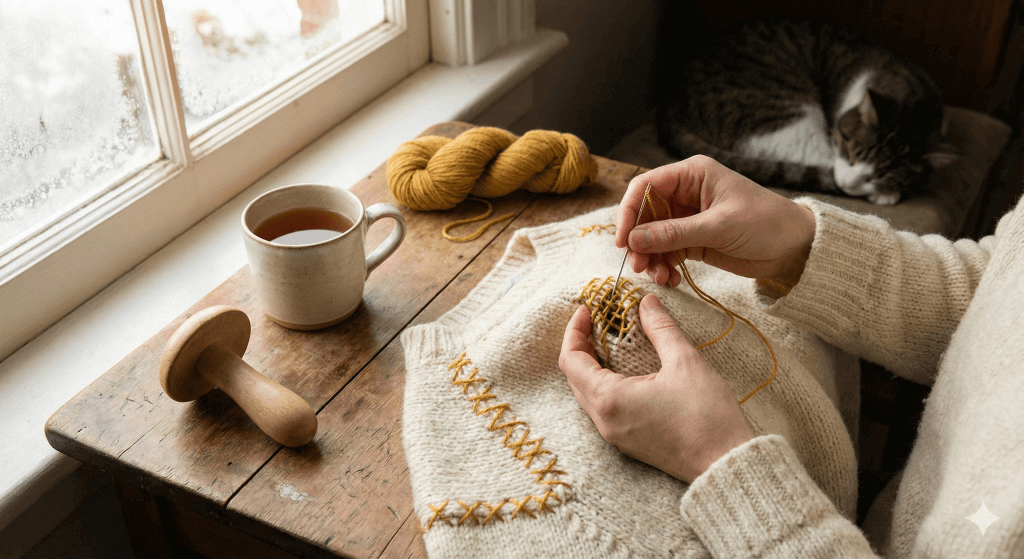
Winter isn’t just for hibernation; it’s for restoration.
January and February are often viewed as the “waiting room” of the year. It is dark, it is cold, and we spend most of our time indoors waiting for the sun to return.
But in the world of sustainable living, this season has a special purpose. In agrarian societies, winter was not “dead time”; it was Mending Season. When the fields were frozen and outdoor work was impossible, people sat by the fire to repair tools, darn socks, and patch quilts.
In our modern era of “Fast Fashion” and one-click shipping, we have lost this ritual. When a button pops off, we donate the shirt. When a sweater gets pilled, we trash it. When a chair leg gets wobbly, we drag it to the curb.
This winter, I invite you to reclaim the art of maintenance. We are going to turn repair from a chore into a cozy, meditative ritual. Pour a cup of tea, put on a podcast, and let’s fix what we own.
The Revolutionary Act of Repair
Repairing an item is a radical act against consumerism. The fashion industry relies on planned obsolescence—the idea that clothing should fall apart or go out of style quickly so you buy more.
Consider this: Extending the life of a piece of clothing by just nine months reduces its carbon, waste, and water footprint by 20-30%.
You don’t need to be a professional tailor or a carpenter. Most repairs require zero skill, just a little patience. Here is how to build your Winter Mending practice.
The Kit: The “First Aid” Box for Your Home
A sewing machine is not needed. In fact, for a small apartment, a machine is just another bulky item to store. You need a “Mending Tin” (an old cookie tin works best, naturally).
The Essentials:
- Needles: A variety pack (thin for cotton, thick/dull for wool).
- Thread: Black, white, and grey (covers 90% of needs).
- Embroidery Floss: For visible mending (more on that later).
- Fabric Glue: For the sewing-averse.
- A “Depiller” (Fabric Shaver): The single best tool for winter knits.
- Walnuts: Yes, the nut. (Trust me).
Technique 1: The Magic of Depilling (Restoring Knits)
Have you ever stopped wearing a favorite sweater because it looked “shabby”? It was likely covered in pills—those tiny balls of fuzz that form in high-friction areas (under the arms, where your bag hits your hip).
Pilling does not mean the garment is ruined. It just means it has been loved.
The Ritual:
- Lay your sweater on a flat surface (ironing board or table).
- Take an electric fabric shaver (or a simple razor blade if you are careful).
- Gently shave off the fuzz balls.
The result is instant. The sweater will look brand new. Doing this to your entire knitwear collection in January is deeply satisfying—like exfoliation for your closet.
Technique 2: Visible Mending (Sashiko)
For decades, the goal of mending was to be invisible. You wanted to hide the tear so no one knew the garment was damaged. This is difficult and stressful for beginners.
Enter Visible Mending.
Inspired by the Japanese tradition of Sashiko, visible mending celebrates the repair. You use a contrasting thread color (like bright sashiko white thread on blue denim) to stitch over a hole. You aren’t hiding the damage; you are highlighting the history of the garment.
How to do it:
- The Patch: Put a scrap of fabric behind the hole in your jeans.
- The Thread: Thread a needle with thick, bright embroidery floss.
- The Stitch: Use a simple running stitch (up, down, up, down) to sew the patch to the jeans. Create rows of stitches, crosses, or geometric patterns.
It requires zero precision. If your lines are crooked, it adds character. It turns a mass-produced pair of jeans into a one-of-a-kind piece of art.
Technique 3: Furniture First Aid
Winter mending isn’t just for clothes. Our small-space furniture takes a beating.
The Walnut Trick
Wooden furniture often gets shallow scratches that expose the lighter wood underneath. You don’t need stain or varnish.
The Fix: Rub a raw walnut meat (pecans work too) over the scratch. The oil in the nut darkens the wood, and the meat fills the gap. Buff it with a cloth. It is magic.
The Wobbly Chair
In winter, indoor air gets very dry (thanks to heaters). Wood shrinks when dry. This often causes chair legs to loosen and wobble.
The Fix: Do not just ignore it. Flip the chair over. Tighten every screw you see. If a screw hole is “stripped” (too big for the screw), stick a toothpick with a dab of wood glue into the hole, break it off, and re-screw. The toothpick fills the gap and gives the screw something to bite into.
The Mindset: Wabi-Sabi
There is a Japanese concept called Wabi-Sabi: finding beauty in imperfection and impermanence. A mended object is beautiful because it tells a story.
When you sit down this weekend to sew a button back on or depill your coat, you are stepping out of the fast-paced consumer cycle. You are saying, “This is enough. What I have is enough.”
So, gather your pile of “to-do” clothes. Put on your favorite album. Make it a date with yourself. Let’s mend.
Time to Start Your Own SmallEcoSpace Cycle
You don’t need acres of land to make a difference. By implementing a simple balcony composting system, you’re not just reducing trash—you’re enriching your own tiny planet.
Start small, stick to the Green-Brown balance, and you’ll be harvesting your first batch of homemade fertilizer in a matter of weeks!
Ready to Launch Your Sustainable Life?
Download our FREE Printable Checklist: The Apartment Composter’s Quick Start Guide
…to successfully set up your bin in one afternoon—no odor, no fuss!
— The SmallEcoSpace Team